

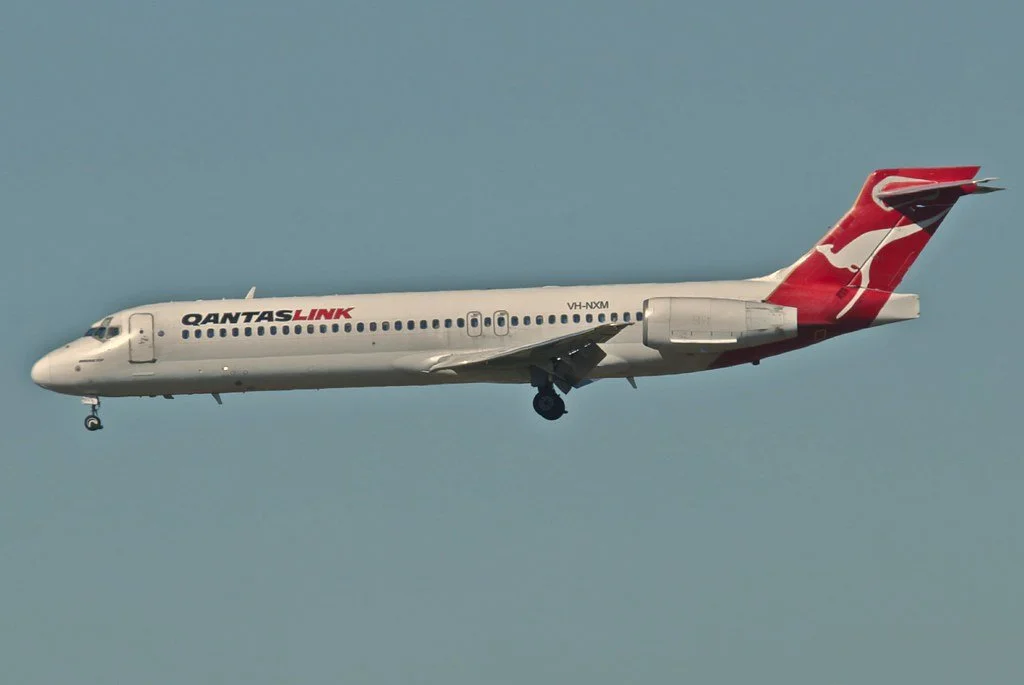
The Boeing 717 is a twin‑engine, single‑aisle passenger jet designed for short‑to‑medium‑range routes.
Its two rear‑mounted Rolls‑Royce BR715 engines and T‑tail layout give it the classic silhouette inherited
from the DC‑9 family. Although it carries the Boeing name, the aircraft began life as the McDonnell Douglas
MD‑95 — the final evolution of a lineage stretching back to the mid‑1960s.
When McDonnell Douglas merged with Boeing in August 1997, the MD‑95 was renamed the Boeing 717.
It became the last commercial airliner ever produced at the historic Long Beach factory, marking the end
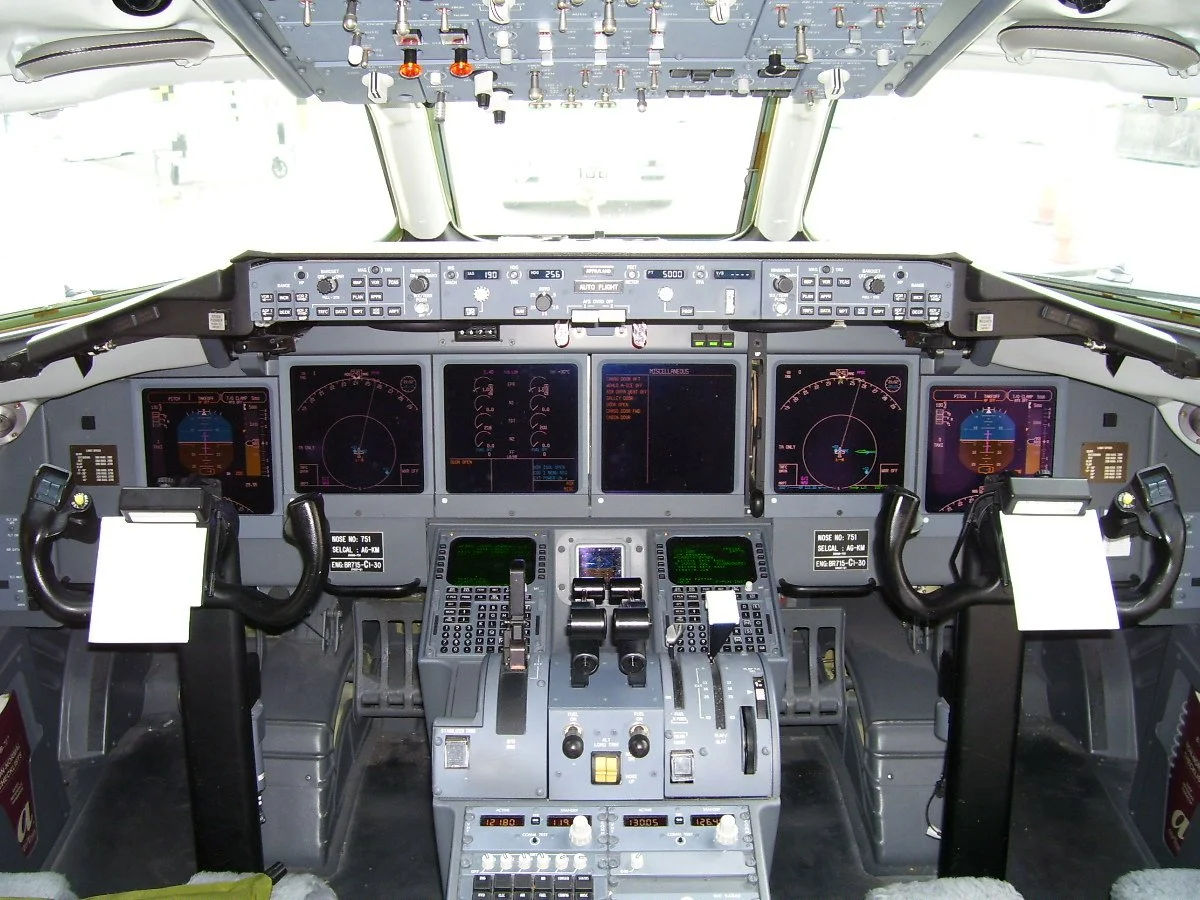
of the Douglas era. Despite its familiar appearance, the 717 was a thoroughly modern aircraft for its time,
featuring new engines, a new cockpit, updated systems, and improved economics.
Boeing 717 — At a Glance
| First Flight | 2 September 1998 |
| Entered Service | September 1999 (AirTran Airways) |
| Manufacturer | McDonnell Douglas / Boeing |
| Engines | 2 × Rolls‑Royce BR715 |
| Passengers | 106–134 (depending on layout) |
| Range | 2,645–3,815 km (variant dependent) |
| Cruise Speed | Mach 0.77 |
| Number Built | 156 |
| Notable Operators | AirTran, Hawaiian, Midwest, QantasLink, Delta |
| Fun Fact | The 717 was the last commercial aircraft ever built at Long Beach — ending the Douglas era. |
Boeing 717 — Development Timeline
- 1965: Douglas introduces the DC‑9.
- 1980: MD‑80 enters service.
- 1990: MD‑90 introduced with glass cockpit.
- 1991: MD‑95 project announced at the Paris Airshow.
- 1997: McDonnell Douglas merges with Boeing; MD‑95 renamed Boeing 717.
- 10 June 1998: First 717 rollout.
- 2 September 1998: First flight.
- 1 September 1999: FAA certification.
- 1999: First delivery to AirTran Airways.
- 2006: Final 717 delivered; production ends at 156 aircraft.

History
The Boeing 717’s story begins long before Boeing became involved. In the mid‑1960s, the Douglas Aircraft
Company introduced the DC‑9, a short‑range jetliner designed to complement the larger DC‑8. The DC‑9 proved
hugely successful, with nearly 1,000 aircraft produced by the time its manufacturing run ended in 1982.
In 1980, the second generation of the design arrived: the MD‑80. This aircraft retained the DC‑9’s basic
layout but featured improvements in aerodynamics, avionics, and passenger comfort. A stretched version,
the MD‑90, followed in 1990, introducing a modern glass cockpit and updated systems.
McDonnell Douglas believed there was still a gap in the market for a smaller, efficient 100‑seat jet.
Throughout the 1980s they explored several concepts, including the shorter MD‑87, but market interest was
lukewarm. In 1991, they revisited the idea with a new project: the MD‑87‑105, named for its intended seating
capacity.
At the 1991 Paris Airshow, McDonnell Douglas officially announced the MD‑95 — a modernised successor to the
aging DC‑9 fleet. The MD‑95 would feature new engines, updated avionics, and improved systems, while retaining
the proven rear‑engine, T‑tail configuration.
ValuJet Airlines launched the program with an order for 50 aircraft plus 50 options. Despite this promising
start, no further orders were placed for two years, leaving McDonnell Douglas anxious about the project’s
future. Still, development continued, and the MD‑95 moved steadily toward production.

Construction of the first MD‑95 began in May 1998. By this time, McDonnell Douglas had merged with Boeing
(1997), and the new parent company faced a decision: cancel the project or proceed. Boeing chose to continue
development and rebranded the aircraft as the Boeing 717.
The rollout ceremony took place on 10 June 1998, followed by the maiden flight on 2 September 1998.
Certification was achieved on 1 September 1999, and AirTran Airways — the launch customer — received the
first aircraft shortly thereafter.
Passengers and operators quickly appreciated the 717’s reliability and performance. The aircraft achieved
a dispatch rate exceeding 99%, outperforming competitors such as the BAe 146. AirTran reported that a
C‑check (performed every 4,500 hours) took just three days, compared to 21 days for the DC‑9 — a major
maintenance advantage.
Despite its strengths, the 717 faced increasing competition from new regional jets produced by Bombardier
and Embraer. A major setback occurred when Air Canada selected Bombardier aircraft over the 717, prompting
Boeing to reassess the program’s viability.
In January 2005, Boeing announced that production would end once existing orders were fulfilled. The final
717 — the 156th built — rolled off the Long Beach assembly line in April 2006. The last two aircraft were
delivered to AirTran and Midwest Airlines on 23 May 2006. AirTran, fittingly, was both the first and last
customer.
Specifications
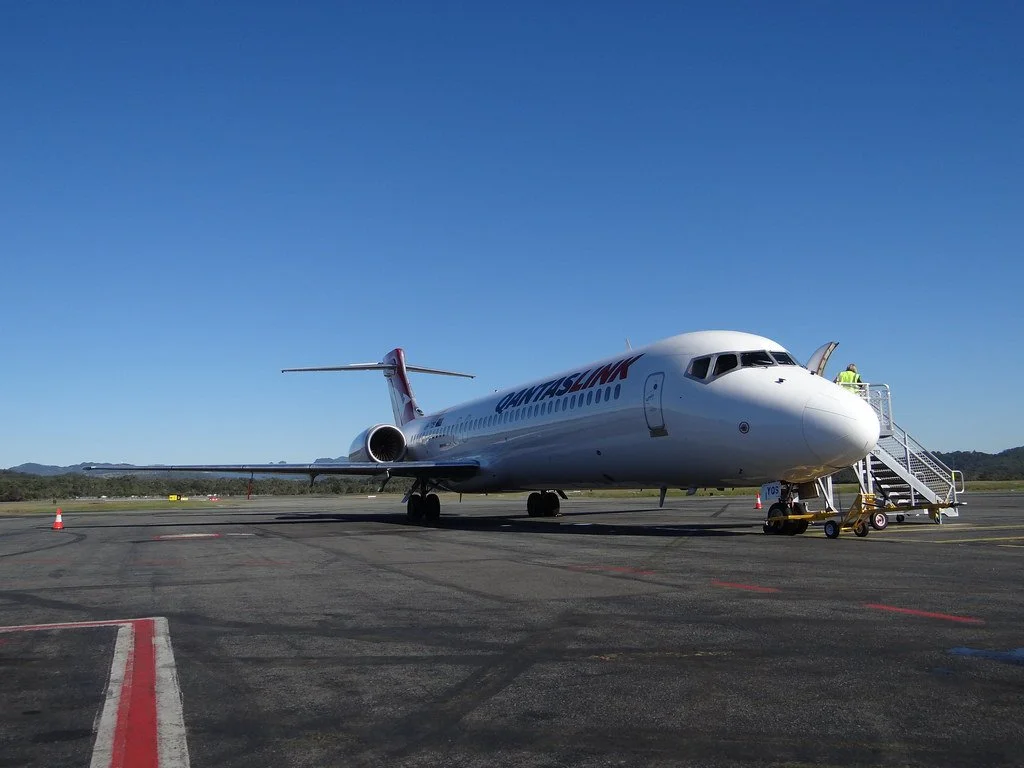
First scheduled service: Brisbane (BNE) to Canberra (CBR) as QF1545 on 19 November 2013.
Although the Boeing 717 was produced in only one main variant — the 717‑200 — operators could choose
between two weight configurations: the Basic Gross Weight and the High Gross Weight. The higher‑weight
version offered increased payload capability and extended range, making it more suitable for longer
short‑haul routes. The table below details the full specifications of the Boeing 717.
Boeing 717 Specifications Table
| Model / Variant | Boeing 717‑200 Basic Gross Weight |
Boeing 717‑200 High Gross Weight |
|---|---|---|
| Flight Crew | 2 | |
| Length | 37.8 m (124 ft) | |
| Wingspan | 28.47 m (98 ft 5 in) | |
| Tail Height | 8.92 m (29 ft 1 in) | |
| Fuselage Width (external) | 3.342 m (10 ft 11.6 in) | |
| Cabin Width (internal) | 3.145 m (10 ft 3.8 in) | |
| Passenger Capacity |
1‑Class High Density: 134 1‑Class Standard: 117 2‑Class Standard: 106 |
|
| Empty Weight | 30,617 kg (67,500 lb) | 31,071 kg (68,500 lb) |
| Maximum Take‑off Weight (MTOW) | 49,900 kg (110,000 lb) | 54,900 kg (121,000 lb) |
| Cargo Capacity | 26.5 m³ (935 ft³) | 20.7 m³ (730 ft³) |
| Service Ceiling |
37,100 ft (11,300 m) maximum 34,100 ft (10,400 m) cruise |
|
| Cruising Speed |
Mach 0.77 (504 mph / 438 knots / 811 km/h) at 34,100 ft (10,400 m) |
|
| Maximum Range | 1,430 nmi (2,645 km) | 2,060 nmi (3,815 km) |
| Fuel Capacity | 13,903 L (3,673 US gal) | 16,665 L (4,403 US gal) |
| Engines (x2) | Rolls‑Royce BR715‑A1‑30 | Rolls‑Royce BR715‑C1‑30 |
| Engine Thrust | 82.3 kN (18,500 lbf) | 93.4 kN (21,000 lbf) |
Assembly
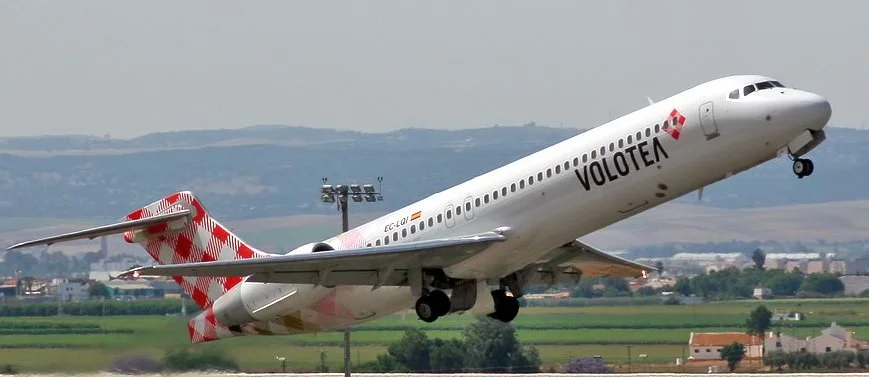
The Boeing 717 was assembled at the historic Long Beach facility in California — the same factory that
produced generations of Douglas and McDonnell Douglas aircraft. Although final assembly took place in the
United States, the 717 was a highly international program, with major components manufactured by partners
around the world.
McDonnell Douglas originally explored building the MD‑95 (later the 717) in China, as had been done with
the MD‑80 and MD‑90. However, contractual limitations prevented the MD‑95 from being included in the
production quota. As a result, McDonnell Douglas and Boeing partnered with several international suppliers
to reduce development costs and streamline manufacturing.
Boeing 717 Component Manufacturers
| Boeing 717 Component | Manufacturer |
|---|---|
| Wings | Halla Group (South Korea) |
| Fuselage | Alenia (Italy) |
| Tail | Aerospace Industrial Development Corporation (Taiwan) |
| Horizontal Stabiliser | ShinMaywa (Japan) |
| Nose and Cockpit | Korean Airlines Manufacturing Division |
These international partnerships helped reduce production costs and ensured a steady supply of components
for the 717 program. The global nature of the aircraft’s construction also reflected the increasingly
international approach to airliner manufacturing in the late 1990s and early 2000s.

Orders and Deliveries
The Boeing 717 attracted a diverse mix of customers across North America, Europe, Asia and Australia.
Although total production reached only 156 aircraft, the 717 developed a loyal following thanks to its
reliability, low operating costs, and excellent dispatch performance. Many aircraft changed hands several
times throughout their service lives, but the table below reflects the original orders placed with Boeing.
| Customer Name | Country | Engine | Model Series | Order Date | Order Total | Delivery Total | Outstanding |
|---|---|---|---|---|---|---|---|
| 205 | 155 | 50 | |||||
| Bavaria | Germany | RR | 717‑200 | May‑98 | 4 | 4 | 0 |
| Bavaria | Germany | RR | 717‑200 | May‑98 | 1 | 1 | 0 |
| AirTran Airways (Merged with Southwest) | USA | BR | 717‑200 | Mar‑02 | 7 | 7 | 0 |
| AirTran Airways (Merged with Southwest) | USA | BR | 717‑200 | Apr‑01 | 2 | 2 | 0 |
| AirTran Airways (Merged with Southwest) | USA | BR | 717‑200 | May‑04 | 4 | 4 | 0 |
| AirTran Airways (Merged with Southwest) | USA | BR | 717‑200 | May‑04 | 2 | 2 | 0 |
| AirTran Airways (Merged with Southwest) | USA | BR | 717‑200 | Jul‑03 | 4 | 4 | 0 |
| AirTran Airways (Merged with Southwest) | USA | BR | 717‑200 | Jul‑03 | 2 | 2 | 0 |
| AirTran Airways (Merged with Southwest) | USA | BR | 717‑200 | Aug‑01 | 1 | 0 | 1 |
| AirTran Airways (Merged with Southwest) | USA | BR | 717‑200 | Dec‑95 | 8 | 0 | 8 |
| AirTran Airways (Merged with Southwest) | USA | RR | 717‑200 | Dec‑95 | 8 | 8 | 0 |
| AirTran Airways (Merged with Southwest) | USA | RR | 717‑200 | Dec‑95 | 8 | 8 | 0 |
| AirTran Airways (Merged with Southwest) | USA | BR | 717‑200 | Dec‑95 | 6 | 6 | 0 |
| AirTran Airways (Merged with Southwest) | USA | RR | 717‑200 | Dec‑95 | 6 | 6 | 0 |
| AirTran Airways (Merged with Southwest) | USA | BR | 717‑200 | Dec‑95 | 13 | 13 | 0 |
| AirTran Airways (Merged with Southwest) | USA | BR | 717‑200 | Dec‑95 | 1 | 1 | 0 |
| Hawaiian Airlines | USA | BR | 717‑200 | Mar‑00 | 7 | 7 | 0 |
| Hawaiian Airlines | USA | RR | 717‑200 | Mar‑00 | 6 | 6 | 0 |
| Jetstar | Australia | RR | 717‑200 | Feb‑01 | 1 | 1 | 0 |
| Jetstar | Australia | RR | 717‑200 | Dec‑00 | 2 | 2 | 0 |
| Midwest Airlines, Inc. | USA | BR | 717‑200 | Apr‑02 | 11 | 11 | 0 |
| Midwest Airlines, Inc. | USA | BR | 717‑200 | Apr‑02 | 6 | 6 | 0 |
| Midwest Airlines, Inc. | USA | BR | 717‑200 | Apr‑02 | 5 | 5 | 0 |
| Midwest Airlines, Inc. | USA | BR | 717‑200 | Apr‑02 | 3 | 3 | 0 |
| Pembroke Capital Limited | Ireland | BR | 717‑200 | Jan‑01 | 2 | 0 | 2 |
| Pembroke Capital Limited | Ireland | BR | 717‑200 | Dec‑98 | 4 | 0 | 4 |
| Pembroke Capital Limited | Ireland | BR | 717‑200 | Dec‑99 | 15 | 0 | 15 |
| Pembroke Capital Limited | Ireland | RR | 717‑200 | Dec‑98 | 3 | 3 | 0 |
| Pembroke Capital Limited | Ireland | BR | 717‑200 | Dec‑98 | 6 | 6 | 0 |
| Pembroke Capital Limited | Ireland | RR | 717‑200 | Dec‑98 | 3 | 3 | 0 |
| Quantum Air S.A. | Spain | RR | 717‑200 | May‑00 | 3 | 3 | 0 |
| Turkmenhowayollary Agency | Turkmenistan | BR | 717‑200 | May‑03 | 2 | 2 | 0 |
| Turkmenhowayollary Agency | Turkmenistan | BR | 717‑200 | Jul‑00 | 2 | 2 | 0 |
Legacy
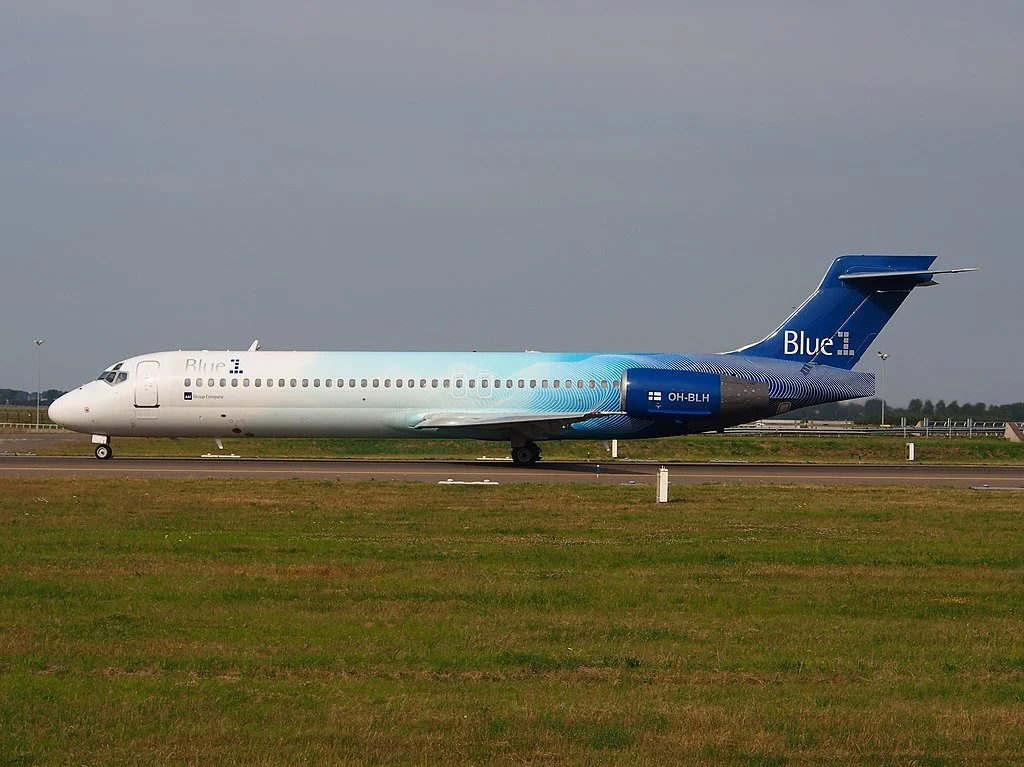
The Boeing 717 occupies a unique place in aviation history. Although produced in relatively small numbers,
it represents the final chapter of a lineage that began with the Douglas DC‑9 in the 1960s. Over four decades,
this family of aircraft evolved through the MD‑80 and MD‑90 before culminating in the modernised MD‑95 —
renamed the Boeing 717 after the McDonnell Douglas merger.
For operators, the 717 proved to be a remarkably reliable and efficient aircraft. Its dispatch rate exceeded
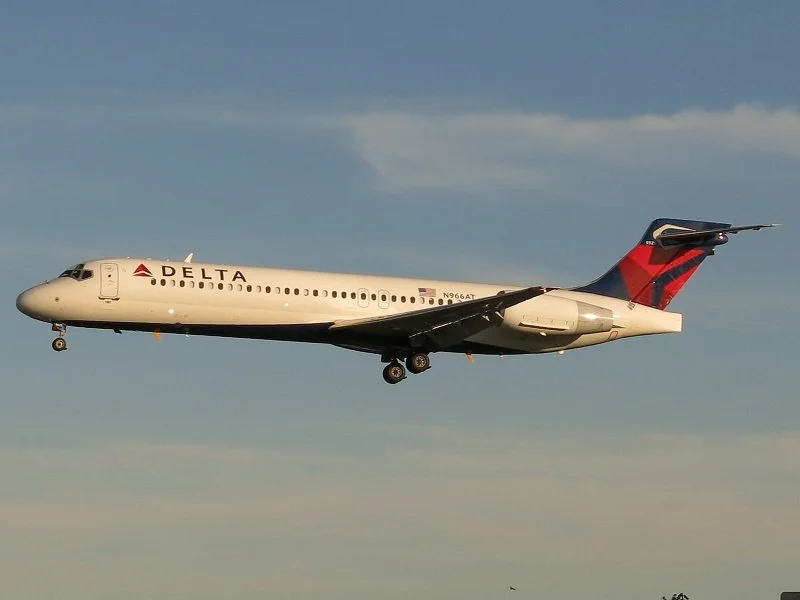
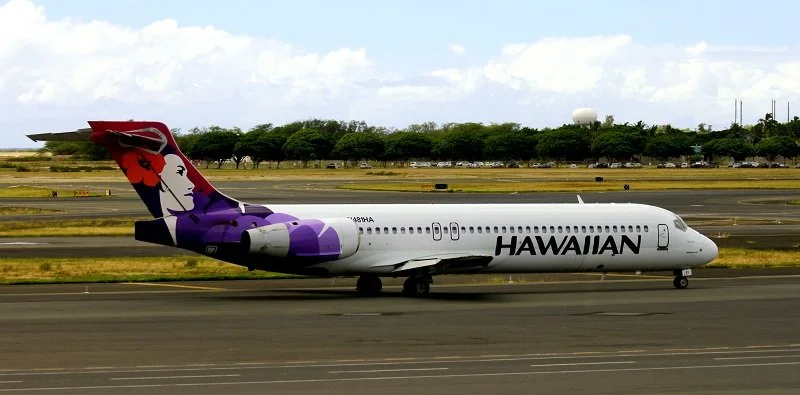
99%, outperforming many competitors. Airlines such as AirTran, Hawaiian, Midwest and QantasLink praised the
717 for its low operating costs, quick turnaround times, and passenger‑friendly cabin layout. The 2‑3 seating
configuration, with only one middle‑seat column, made the aircraft popular with travellers.
The 717 also demonstrated the value of modernising a proven design. By combining the DC‑9’s robust airframe
with new engines, updated avionics and improved systems, Boeing delivered an aircraft that was both familiar
and forward‑looking. Its Rolls‑Royce BR715 engines offered excellent fuel efficiency and reduced maintenance
requirements, contributing to the aircraft’s strong operational performance.

Despite its strengths, the 717 faced increasing competition from new regional jets produced by Bombardier
and Embraer. These aircraft offered similar seating capacities with lower acquisition costs, making them
attractive to airlines seeking fleet flexibility. When Boeing lost a major Air Canada order to Bombardier,
the future of the 717 became uncertain.
In January 2005, Boeing announced that production would end once existing orders were completed. The final
717 rolled off the Long Beach assembly line in April 2006, marking the end of commercial aircraft production
at a factory that had been active since the Douglas DC‑8 era. The last two aircraft were delivered to AirTran
and Midwest Airlines on 23 May 2006 — fittingly, AirTran was both the first and last customer.
Today, the Boeing 717 continues to serve reliably with operators such as Delta Air Lines and QantasLink.
Its longevity is a testament to the strength of the DC‑9 design philosophy and the thoughtful modernisation
that shaped the 717. Although no direct successor was ever developed, the aircraft remains a beloved and
distinctive part of aviation history — the final Douglas‑heritage jetliner to take to the skies.